



Guide to the procedures and conditions for dogs to travel from Egypt abroad: papers, vaccinations, and preparing the dog to fly (2026)
Air travel of dogs is quite different from that of any other pet; dogs vary in size from puppies as small as two kilograms to large breeds exceeding 50 kilograms, as well as their anatomical structure and the sensitivity of some breeds to temperatures and air pressure.Procedures and conditions for dogs to travel from Egypt abroadIt is not limited to the purchase of an air ticket, but it is a precise logistical and medical system that begins in the chronological order of vaccinations and laboratory tests, passes through the selection of the IATA-approved travel box, and ends with the completion of the veterinary examination and the issuance of official certificates stamped with the eagle's seal from Cairo International Airport.
In this comprehensive guide from the field experience of the Alfares Pets team, we present you with a detailed road map that covers all the steps of your dog's travel to any country around the world (Gulf countries, Europe, America, Canada, etc.), explaining the essential differences between traveling in the passenger cabin, the air-conditioned cargo hold, or independent air cargo, and how to protect your dog and avoid refusing to board his plane at the airport.
Table of Contents
- 1. Timetable for arranging the dog's travel (work plan from 2 months before take-off)
- 2. Dogs' Veterinary Medical File: Microchip, Rabies Vaccine, and Octavalent Vaccination (DHPPiL)
- 3. Rabies Titer Test for dogs and countries that require it is mandatory
- 4. Issuing the official health certificate and veterinary quarantine permits at Cairo Airport
- 5. Where does your dog fly? (PETC cab, AVIH, Cargo mother)
- 6. Breed restrictions: flat-faced dogs (Brachycephalic) and strong dogs (CR82)
- 7. IATA approved travel box specifications and dog gauging method
- 8. Preparing the dog psychologically and physically on the day of travel (fasting, sedatives, airport exercises)
- 9. Table of Comparison of Dog Travel Requirements by Geographic Destination
- 10. Frequently Asked Questions on Dogs Traveling and Shipping Abroad
1. Timetable for arranging the dog's travel (work plan from 2 months before take-off)
The common mistake of most breeders is to start preparing a few days before traveling, which often leads to missing the trip due to the biological waiting periods for vaccines. Here's the correct chronological order:
- 2 to 3 months before travel:Implantation of ISO Microchip, administration of the basic or booster rabies vaccine dose, and withdrawal of the rabies analysis sample (Titer Test) if imposed by your destination (such as the European Union, Britain, and America).
- Before you travel to perform Hajj: Apply for a prior import permit or license for the destination country (such as Nama platform for Saudi Arabia or CDC permissions for America), and book and confirm the dog's space with the carrier.
- 2 weeks before travel:Buy the right travel box for your dog and train him to sleep and eat inside to break the fear barrier.
- 24 to 48 hours before travel:Clinical examination of the dog inside theAlfares Pets Veterinary Clinic, giving worm and tick treatments, and extracting the government health certificate with the eagle seal.
2. Dogs' Veterinary Medical File: Microchip, Rabies Vaccine, and Octavalent Vaccination (DHPPiL)
All international aviation authorities and veterinary organizations require an uncompromising medical sequence:
- Microchip implantation:An international ISO 11784/11785 15-digit microchip implanted under the skin of the neck.Gold standardThe chip should be implanted and its history recorded in the ledger before or on the same day the rabies vaccine is administered.
- Rabies Vaccine:Mandatory for all countries of the world for dogs that have completed 12 weeks (3 months). The vaccination must have been in place for at least 21 days as an immunological incubation period before the dog is allowed to board the plane, and the validity of the dose should not exceed a full year.
- Octavalent or hexavalent combination vaccine (DHPPiL):To protect the dog from the most dangerous pandemic viruses during travel and transit, it includes:
- The deadly parvovirus (Canine Parvovirus).
- Distemper or dog plague (Canine Distemper).
- Infectious Canine Hepatitis.
- Leptospirosis and parainfluenza.
- Antiparasitics (Internal & External Parasites):Dosing the dog with intestinal deworming tablets (with Praziquantel) and ampoules for fleas and ticks and documenting the date and hour of the dose in the health book.
3. Rabies Titer Test for dogs and countries that require it is mandatory
The Rabies Equivalent Antibody Test (RNATT/FAVN Titer Test) is a laboratory blood test that proves that a dog's immune system has produced enough antibodies to protect it from transmission. Its conditions are summarized as follows:
- Internationally accepted pass rate:The score must record an efficiency ratio of not less than0.5 IU/mlHe
- Accredited Laboratory in Egypt:The sample is drawn and the official report issued in English is approved by the Government Animal Health Research Institute in Dokki.
- Mandatory States:27 EU countries, United Kingdom, United States of America (CDC), United Arab Emirates, Japan, and Australia.
- Waiting period after analysis:Europe requires a mandatory waiting period of 90 days (3 months) between the date the blood sample is drawn and the date the dog is allowed to enter its territory, while other countries accept to travel as soon as the positive result is issued.
For details of the lab test and charges, seeGuide to Rabies Analysis for Cats and Dogs in EgyptHe
4. Issuing the official health certificate and veterinary quarantine permits at Cairo Airport
In order for a dog to pass through the inspection and customs gates at Cairo Airport and enter the destination country, the following official documents must be issued:
- Egyptian Government Health Certificate:Issued by the General Authority for Veterinary Services and sealed with the official eagle seal through an officeCairo International Airport Veterinary QuarantineDone 24-48 hours before the trip.
- Digital Import Permits and Permits:Obtaining a pre-entry license from the government platforms of the country of arrival (such as the Saudi Nama platform, Tharwa Oman, and CFIA permits for Canada).
- Bill of Lading or Baggage Receipt:Airway Counter or AWB Overweight Payment Voucher.
We save you the trouble of administrative trips through our specialized service inObtaining and clearing dog travel papers and certificates in EgyptHe
5. Where does your dog fly? (PETC cab, AVIH, Cargo mother)
The airlines determine where the dog travels according to his total weight with the box and his breed:
1. Passenger cabin travel (Pet in Cabin - PETC)
Exclusively for puppies and very small dogs (e.g. Chihuahua, Pomeranian, Yorkshire). The total weight of the dog with the suitcase must not exceed8 kgThe cloth bag should be placed under the seat in front of the passenger throughout the trip.
2. Travelling as checked baggage in the air-conditioned hold (In Hold - AVIH)
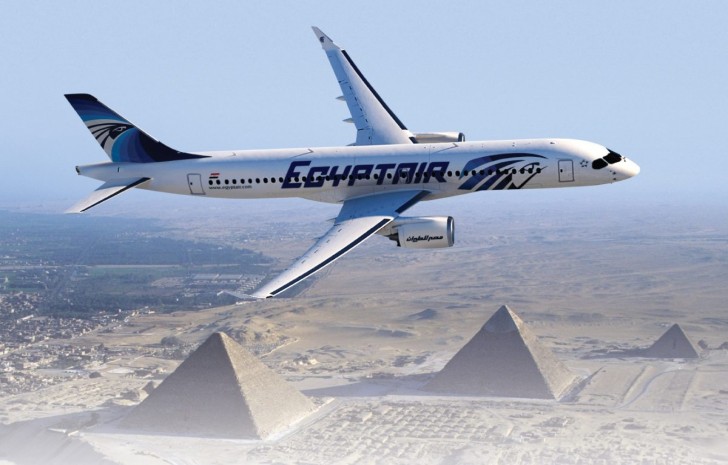
The primary choice for most medium and large dogs (municipal, Husky, Golden, and German Shepherd) that weigh between 9 kg and 50 kg with the box. The dog travels on the same owner's plane inside a lower compartment equipped with atmospheric pressure and full heat conditioning (18-22°C), and is picked up from the private luggage lounge on arrival. Check out our National Carrier Policies atConditions and prices of animal travel on EgyptAirHe
3. Manifested Cargo
For use in the following situations: very large dogs that exceed their baggage counter weights, dogs traveling alone without an escort, or to countries that require the reception of animals as air freight only under their sovereign laws (such as Britain and the UAE).Certified International Shipping ServicesHe
6. Breed restrictions: flat-faced dogs (Brachycephalic) and strong dogs (CR82)
Global aviation regulations impose special rules on two types of dogs:
1. Breeds of Dogs with Flat Face and Short Nose (Snub-nosed Dogs)
Dogs include: Pug, French Bulldog, English Bulldog, and Boxer. These dogs have a respiratory system that is sensitive to high temperatures, so some airlines prevent them from being shipped in the wards during the summer, while other companies require a travel cage that is twice the usual size with ventilation holes on 4 sides to protect them from dyspnea syndrome.
2. Dangerous & Fighting Breeds
Breeds include: Pitbull Terrier, Staffordshire, Rottweiler, and Mastiff. These strains are forbidden to travel inside traditional plastic cages, and IATA regulations require them to travel inside * * armored wooden boxes reinforced with steel frames and grids * * A commission is made according to IATA Container Requirement 82-CR82, with import restrictions imposed by some countries on these strains.
7. IATA approved travel box specifications and dog gauging method
The safety of the dog and the approval of the airport employee depends 100% on the cage conforming to IATA rules. Measure your dog with the tunnel while standing on level ground:
- (A) Dog Length:from the tip of the nose to the tail germ.
- (B) Elbow joint height:from the floor to the anterior elbow joint.
- (C) Shoulder Width:The widest point between the shoulders.
- (D) Overall Height:From the ground to the top of the head (or the top of the ears in erect-eared dogs such as Germans and Huskies).
Technical conditions of the dog box:
- Dimension:The box should allow the dog to stand upright without touching the ceiling (minimum box height = $D + $5\text{ cm}), turn 360 degrees, and lie flat.
- Fitting:Use tight metal bolts and nuts (boxes with plastic clips are rejected).
- ATTACHMENT:Install watering and a water bowl in the metal door mesh, and spread a high absorbency training mat (Pee Pad) in the floor.
To review the size chart from size 100 to 700, seeIATA Approved Animal Travel and Shipping Box Selection GuideHe
8. Preparing the dog psychologically and physically on the day of travel (fasting, sedatives, airport exercises)
To ensure a calm and stress-free ride for the dog and airport cargo officials:
- Fasting System:Stop serving solid food 6-8 hours before the flight to avoid nausea and bowel turbulence inside the box as the atmospheric pressure changes, providing drinking water in moderate quantities up to 2 hours before heading to the airport.
- Discharge power before heading to the airport:Give your dog a long, intense 45-minute walk before putting him in the cage to release his kinetic energy, and help him urinate and defecate, which tends to make him sleepy and relaxed inside the plane.
- Sedatives Situation:International veterinary organizations and IATA warn against giving the dog strong muscle sedatives or hypnotics during flight because they slow the heartbeat, hinder the dog's balance and affect its breathing at altitudes; natural herbal sedatives that are authorized by the veterinarian are sufficient.
- Handling Security Check:Upon inspection in the airport lounge, the dog comes out holding the Leash and passes next to you through the inspection gate while the cage passes empty through the X-Ray machine.
9. Table of Comparison of Dog Travel Requirements by Geographic Destination
| Destination / Region | Dog's Minimum Age | Titer Test | Pre-Import Permission | Common Shipping Method |
|---|---|---|---|---|
| Saudi Arabia | 4 months | Currently not required | Mandatory (Nama Platform) | AVIH / Cargo Amber |
| United Arab Emirates | 4 months | Mandatory (0.5 IU/ml) | Mandatory (MOCCAE website) | Exclusive Cargo |
| European Union (27 States) | 7 months (including 90 days) | Mandatory + 90 days waiting | European Standard Certificate (Annex IV) | Puppy cabin/AVIH ward/ cargo |
| USA | 6 full months | Mandatory (Dokki Approved) | Mandatory (CDC Dog Import Form) | AVIH Ward/ Cargo /Adoption Companions |
| Canada | 3-6 months | Recommended for import | Conformity to CFIA requirements | AVIH Ward/ Cargo /Adoption Companions |
| المملكة الأردنية الهاشمية | 4 months | recommended | Mandatory (Jordan Ministry of Agriculture) | Puppy cabin/AVIH ward/ cargo |
For details of costs and calculation of volumetric weight prices for dog tickets, seeGuide to the cost and prices of shipping dogs and animals from Egypt, and for rescue flights seeShipping Guide for Adoption Dogs and Cats for America and CanadaHe
10. Frequently Asked Questions on Dogs Traveling and Shipping Abroad
How much does it cost for a dog to travel on a plane?
The cost depends on the dog's weight, the size of the box, and the destination; AVIH charges dogs as excess baggage start at $150 to $400 on regional and international flights, and increase for large dogs traveling as independent air freight (Cargo).
Is there a service to transport the dog by equipped car from the governorates to Cairo Airport?
Yes, we provide air-conditioned and equipped cars to transport dogs from all governorates (Alexandria, Giza, Tanta, Mansoura, and Upper Egypt) to the airport door or the clinic viaAnimal transportation and delivery service between governoratesHe
What happens if the airport employee refuses the dog crate on the day of the trip?
If the cage is small or does not comply with IATA requirements, the dog will not be allowed to board the plane; to avoid this, at Alfares Pets we inspect the dog and try the pre-approved box before heading to the airport.
Safe and comfortable travel for your dog with Alfares Pets
Traveling your dog requires in-depth knowledge of box engineering details, veterinary quarantine medical regulations, and divergent airline policies. Proper planning ensures your dog a stress-free trip and your family complete peace of mind without the surprises of lounges.
atAlfares PetsFrom screening, vaccination, and microchip implantation at the clinic, providing accurate IATA-approved boxes, obtaining government certificates with the eagle seal and import permits, and escorting you to the airport until you board the plane safely. Contact us today to arrange your dog's travel to any country in the world with the highest standards of safety and animal welfare.
Contact Alfares Pets Dog Travel & Shipping
To book a medical appointment for your dog, purchase an approved travel box, or inquire about your travel destination requirements, we are happy to hear from you directly:
- WhatsApp Number: +20 102 224 2946
- E-mail info@alfares-pets.com